

How to Learn a New Language
A language teacher shares her real experience learning a language abroad and explains how to learn a new language in a practical and human way.
LIFE AND CULTURELEARN LANGUAGESSPANISH FOR FOREIGNERS
Natalia Daza
1/12/20263 min read

How to Learn a New Language: A Language Teacher’s Real Experience
I’m a language teacher, but I’m also a student. A lifelong learner.
Over the years, I’ve asked myself many questions:
How did I learn languages? How do I learn now? And how do I recommend learning a new language?
In this article, I want to share a personal experience that shaped the way I learn and teach languages — and that may help you if you’re starting (or returning to) the journey of learning a foreign language.
Learning a Language Abroad: My Experience in Istanbul
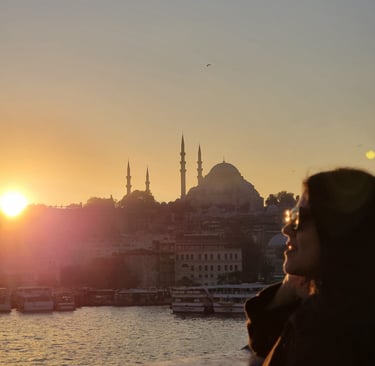
When I lived in Istanbul, everything was new: the culture, the language, and the way of life. I arrived in the city to work for a company expanding into the Spanish-speaking market. In the mornings, I worked in a multilingual environment, and in the afternoons, I taught Spanish online.
Over time, my number of students grew, and that’s how my path as a language teacher began.
Starting a new chapter in a country with a different language led me to make an important decision: to open myself to real language learning — not only through books, but through everyday life.
How to Start Learning a Language from the Basics
For me, learning a language began with the essentials: ordering food, asking for a coffee or a çay, buying groceries at the local shop, listening to conversations, and observing.
I lived in an apartment located on the ground floor of a small neighborhood store (in some areas of Istanbul, these local shops are common — similar to a corner store).
The owner was a man in his early sixties. I’ll never forget his face or the way he taught me how to pronounce the foods I needed to cook. Our language wasn’t words, but gestures, eye contact, and laughter.
I clearly remember pointing at an egg and hearing him say: yumurta. I repeated the word in Turkish, and he smiled, nodding in approval.
That simple exchange became one of the most meaningful moments of my entire experience. It gave me a new perspective during difficult times and reaffirmed my calling as a language teacher.
Learning a Language Is Not Only About the Teacher
I share this story because learning a language is a collective process.
Whether you’re learning from your home country or living abroad, we all play an important role in the language-learning journey.
Learning a language doesn’t depend only on the teacher or the platform you choose. The environment, the cultural context, and the people around you also have a strong influence.
Let’s be honest: not every environment is welcoming, especially when you’re an expat. But fortunately, those people are not the majority.
The Three Key Roles in Language Learning
1. You, as the language student
If you want to learn a language, open yourself to exposure.
If you’re learning online:
Ask your teacher for real-life situations, such as role plays
Ask about the culture
Read articles
Watch videos, series, or interviews in the language
If you live in the country where the language is spoken:
Observe signs and menus
Take photos of new words
Sit in a café and listen
At first, you may not understand much, but little by little you’ll start recognizing words. That is real learning.
2. You, as the language teacher
The role of a teacher goes beyond grammar.
A good language teacher:
Encourages students to expose themselves to the language
Creates real communication spaces
Focuses not only on structure, but also on confidence
Learning a language is, above all, daring to speak.
3. You, as a citizen
And finally, you as a citizen.
Be kind, patient, and empathetic.
Someone is making the effort to communicate in your language. A smile can make the difference between giving up and continuing.
Learning a Language Is Opening Yourself to the World
Learning a language isn’t just about memorizing vocabulary or grammar rules.
It’s about opening yourself to new cultures, new ways of thinking, and new people.
I lived it.
That’s why I teach it today.
Contact US AT
info@holanatalia.com
+34-637036433
© 2025. All rights reserved.